
Bird Flu Tips for Australians
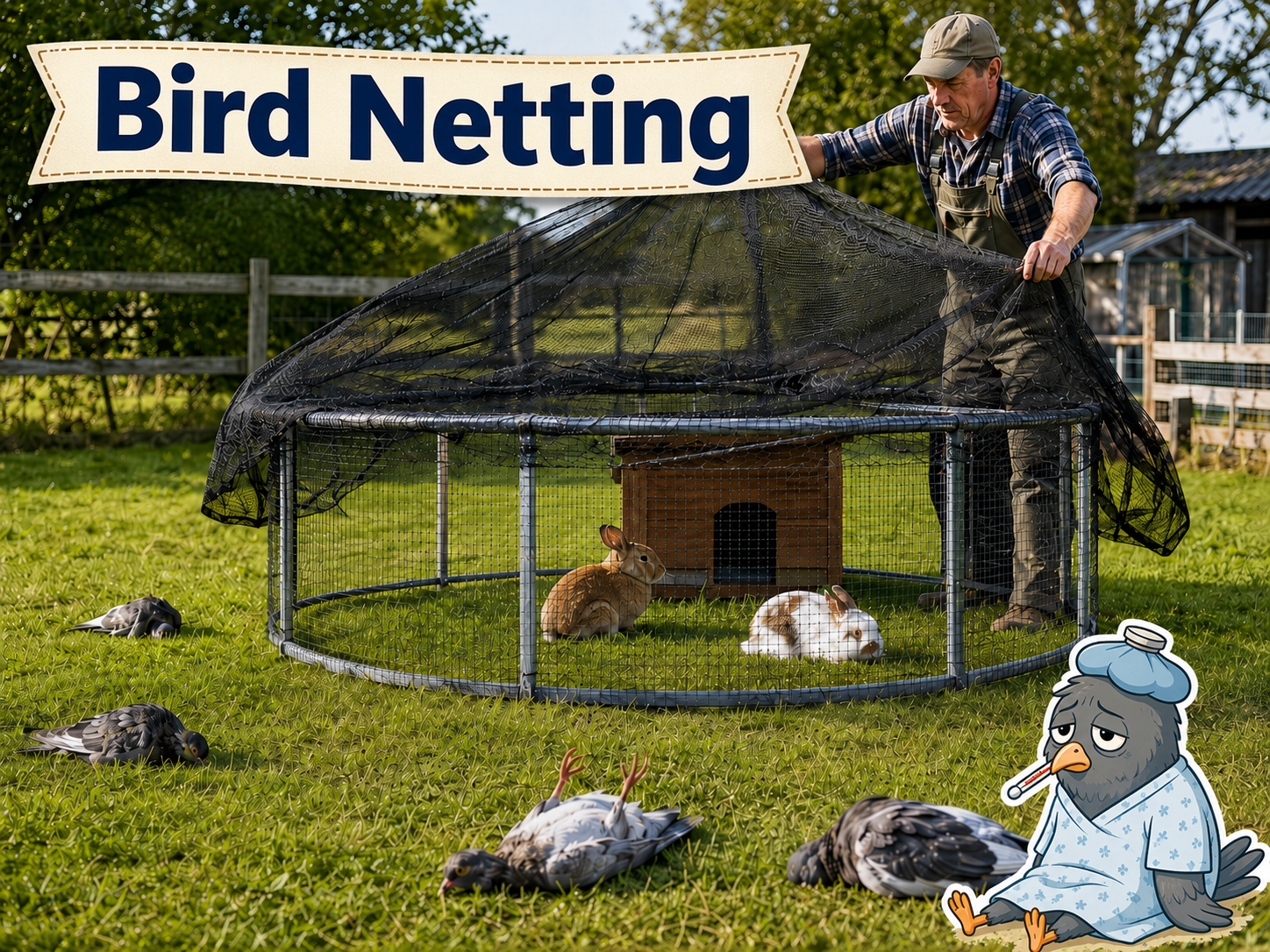
Protect your flock now—not after the virus arrives
The immediate risk is contact between domestic poultry and infected wild birds, including contamination of feed, drinking water and poultry areas.
Permanent enclosed housing may take time and considerable expense to construct. Bird netting offers a relatively cheap, easy and fast way to provide an initial layer of protection while you plan or build something more permanent.
Bird netting can be attached to existing fences, posts, sheds or temporary frames to:
- cover open poultry runs;
- stop wild birds entering feeding and watering areas;
- reduce direct contact between wild birds and poultry;
- temporarily enclose high-risk areas without rebuilding the entire coop.
Government biosecurity guidance specifically recommends using netting, fencing or housing to reduce contact between poultry and wild birds.
Start with the most important areas
Where completely enclosing your poultry area is not immediately practical, concentrate first on:
- The main poultry run.
- Feeders and drinkers.
- Night-time housing.
- Ponds, dams and standing water.
- Areas where wild birds regularly gather.
Keep poultry feed and drinking water under cover and prevent contamination by wild-bird droppings. Natural water from dams, rivers or creeks should be treated before being supplied to poultry.
Netting should be securely fixed, kept reasonably taut and checked for holes or gaps. Choose suitable bird-safe mesh and install it so poultry and wildlife cannot become entangled.
Bird netting does not make a property disease-proof, but it can provide valuable immediate protection when combined with covered feed and water, clean footwear and equipment, visitor controls and daily flock inspections.
Watch for warning signs
Report unusual illness, including:
- several birds dying suddenly;
- breathing difficulty, coughing or sneezing;
- swollen heads;
- loss of coordination;
- reduced eating or drinking;
- diarrhoea;
- a sudden drop in egg production.
Do not touch sick or dead wild birds. Record the location, take photographs from a safe distance and call the Emergency Animal Disease Hotline on 1800 675 888.
Put a barrier in place today
Bird flu numbers are changing quickly. Do not wait until a permanent poultry enclosure is finished before taking action.
Browse bird netting, poultry mesh, enclosed runs and protected poultry feeders at The Farmers Lot and begin reducing wild-bird contact now.
This article provides general biosecurity information. Poultry owners should continue following current directions and advice issued by PIRSA and Australian animal-health authorities.
No posts found
Submit